
Fulfillment Teams
Fulfillment teams have to be fast and careful at the same time. Once a deal closes, the promise sales made becomes your work: an order to pick, pack and ship, or a project to deliver, on time and without mistakes. When something goes wrong, the customer calls support, support calls you, and the answer usually lives in one person's head or a spreadsheet only they understand.
Flows put that process where everyone can see it. How an order or project moves from placed to delivered, and what happens when it doesn't go smoothly, sits on the HubSpot records your team, and the teams around you, already work.
How Flows help fulfillment teams
Every stage says what has to happen. An order's stage tells you where it is. A Flow tells the whole team what has to happen to move it on, and who does it.
Exceptions have a path back. Backorders, damaged deliveries, wrong items and returns each need their own way back into the process, not a dead end. A Decision puts each one where it really happens: in stock or not, standard or expedited, domestic or international.
Your process links to the ones around it. Fulfillment starts where sales ends and hands back to service when it's done. A Next Flow from the end of each process to the start of the next makes those handoffs part of the map, so nobody drops an order between teams.
What's automated is visible. Put the Workflows that create orders, notify customers and update stages on the Steps they support, so the team knows what HubSpot does and what they do.
It's on the record. Flow Cards show the order's process on the order itself, and on the deal, contact and company. Support can answer "where's my order?" without pinging you.
Flows for fulfillment teams
These Flow Library patterns are the best place for a fulfillment team to start. Each one is built out for Hooby Snacks, so you can see it working, then copy it into your own portal and make it yours.
Your pipelines
Your order and project pipelines are where your team spends its day. The Pipeline Flow breaks a long pipeline into short phase Flows, puts each stage's detail in a Child Flow, and links the end of each pipeline to the start of the next. Its example follows a closed deal into an onboarding project, so you can see exactly where sales hands the work to you.
Break apart long pipelines into a sequence of pipeline Flows. Add your HubSpot workflows as accessories so everyone knows what's automated. Connect the ends of each pipeline to the start of the next to ensure no balls are dropped.

The example follows Hooby Snacks' deal pipelines, but the same principles apply to every pipeline you run in HubSpot, including your order and project pipelines.
Breeze AI in your fulfillment process
Breeze helps fulfillment teams mostly behind the scenes. Breeze summarizes a record's history for whoever picks it up, so a new owner of a stuck order or project starts informed. Its customer handoff agent, in beta at the time of writing, compiles a customer's history when they move from sales to onboarding. In workflows, Breeze can read a record and summarize or categorize it, like sorting an exception note into damaged, late or wrong item, and branch on the answer. And because Breeze works from your CRM data, keeping orders and projects complete is what makes all of it useful.
Getting those results takes trial and error, like finding the prompt that sorts exception notes reliably. The Breeze AI Flow is where your team writes down what's worked. For each Step where the team uses Breeze, a Child Flow records the techniques that have proven themselves, so they don't live with one person.
Breeze AI is a powerful tool, but learning to use it effectively takes time and plenty of trial and error. For all the steps where your teams use Breeze in their processes, add a child Flow to record the proven techniques that work best.
The tools around HubSpot
Fulfillment runs on tools outside the CRM: a shipping platform like ShipStation, carrier portals like UPS and FedEx, an inventory or warehouse system, accounting or ERP like QuickBooks or NetSuite, a store like Shopify, and project tools like Asana or monday.com. Each one has a right way to do the job at your company. The Technical Flow walks through each of those jobs screen by screen, with annotated screenshots, so a busy week doesn't depend on the one person who knows the system.
For each tool your team regularly uses, and for every workflow they repeatedly do in that tool, create a Flow that documents what to do. Capture screenshots & annotate them with extra context.
What the team needs to know today
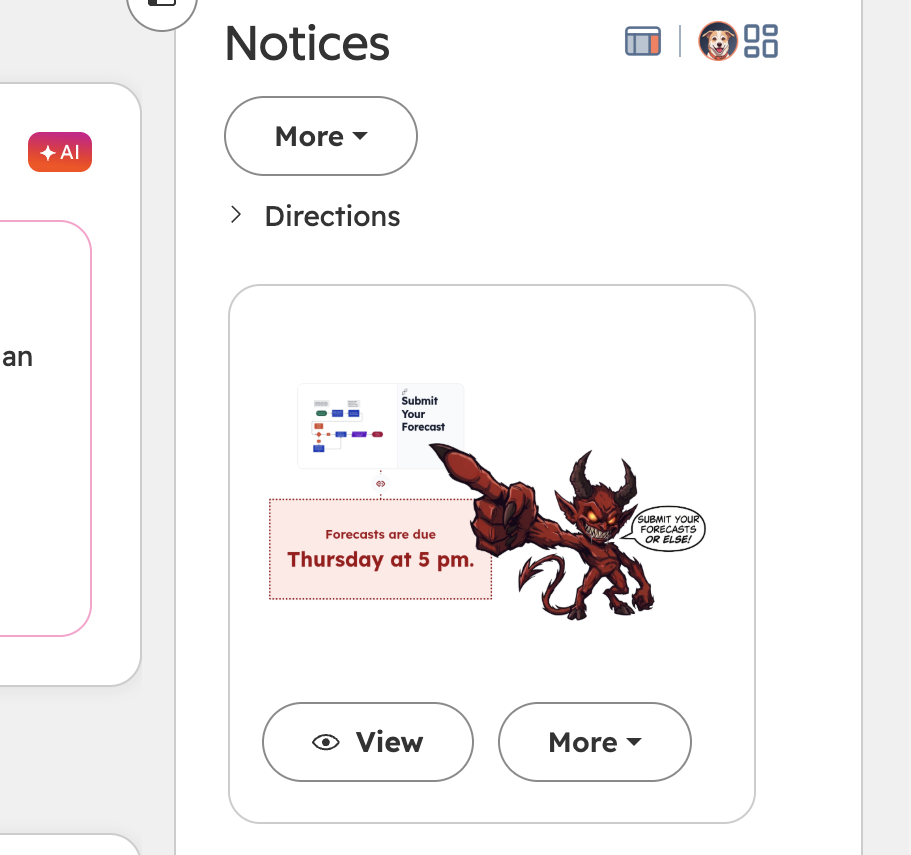
A carrier delay, a supplier that's out of stock, a cut-off moved for the holidays. The Bulletin Flow puts one message on every order your team opens, where it can't easily be ignored, and links to the Flow that shows what to do about it.
Nag your teams in the most effective way possible. Put a bulletin they can't easily ignore on every HubSpot record they work.
Your operations reviews
Fulfillment runs on recurring meetings: the daily stand-up, the weekly exceptions review, the monthly look at on-time delivery. A Recurring Meeting Flow maps what each one needs going in, what it decides and what it sends out. A Meeting Prep Flow maps what each person brings, and when it's due, so the meeting spends its time fixing problems instead of finding them.
For each meeting, fully map what information is needed, what decisions need to be made, and what artifacts need to be created and distributed. Link the relevant Flows so they can be easily accessed in each meeting.
Work backwards from your recurring meeting Flows to document what prep work is required from each member, ensuring you have everything you need to run your meetings efficiently & successfully.
New team members
A new hire who learns the exceptions on a real order learns them the expensive way. The Onboarding Flow maps what every hire does first, then forks by role into each role's own onboarding, which teaches the real Flows they'll work instead of a copy of them.
Define the common onboarding steps for new hires, then branch by team or role to define the specific onboarding steps for each. Give them space in your Flow Pages so everyone can easily find them.
Vacation cover
Orders keep shipping when someone takes a week off. The Vacation Flow maps what each role hands over before they go, what their cover does while they're away, and what they take back when they return, so nothing sits in a queue waiting for them.
Your people go on vacation. It's good for them. Make life easier for those not on vacation by carefully defining what handoffs need to be made per role when your people step away and when they return.

The Onboarding and Vacation examples are written for Hooby Snacks' sales roles. Keep the shape, the common steps first and then a fork by role, and swap in your own fulfillment roles.